
Case Studies
Building a Whack-a-Mole Game for Brandspec at the Queenstown Tradeshow
11 November 2026 · Ping Zero
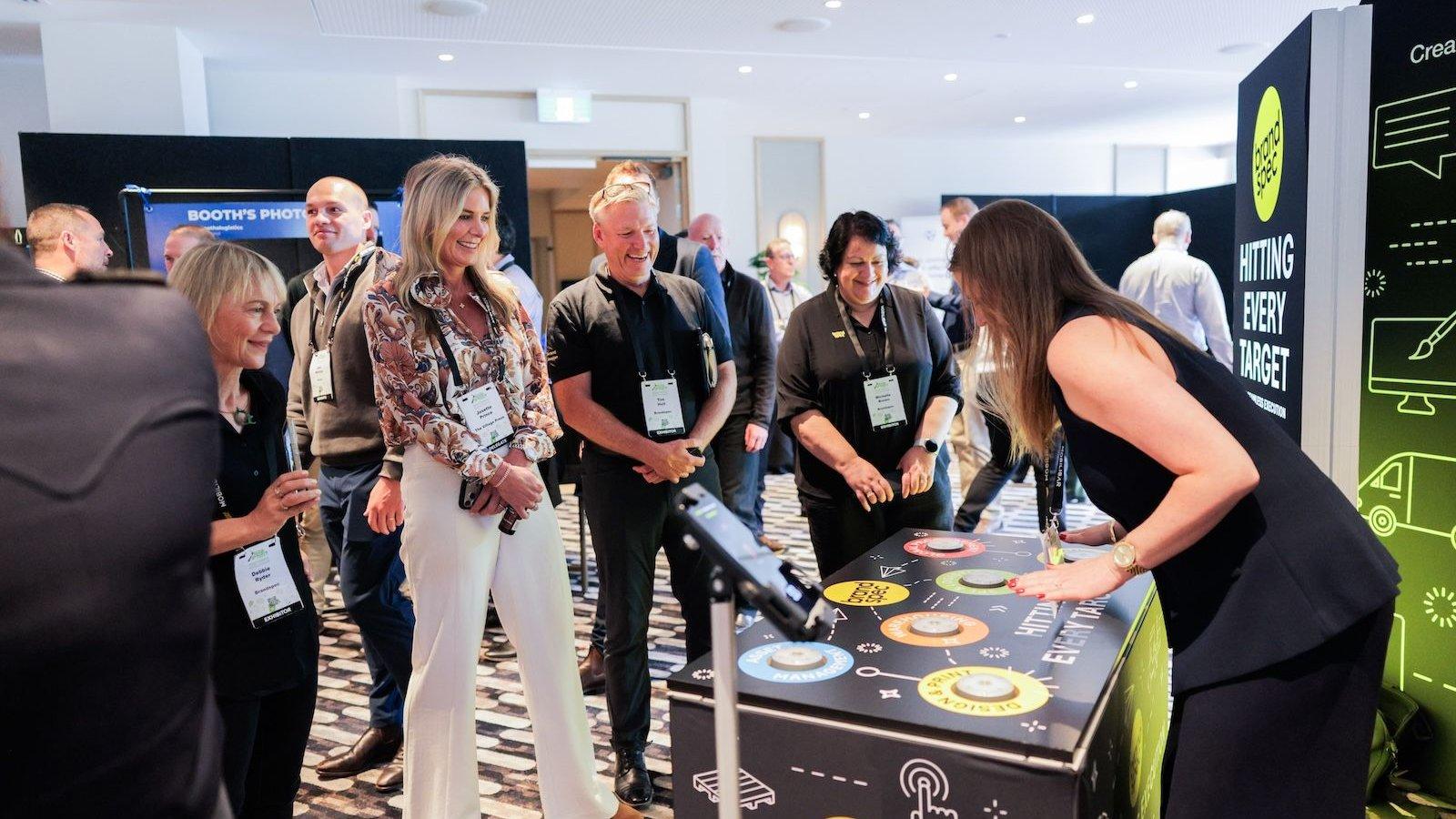
69 hits. That's what it took to be crowned Whack-A-Mole Champion on Brandspec's stand at the Queenstown Tradeshow in November 2026. Holly from NZFGC took the title, then graciously passed the $500 Prezzy Card on to runner-up Anna from Booths, who finished just behind on 67.
Brandspec wanted a trade show game that would pull people onto their stand and give them something to talk about. We designed and built the whole system in-house: a custom whack-a-mole table, the reaction game, the software, a live leaderboard and tablet sign-up. Then we flat-packed it, trained the Brandspec team, and handed it over for them to run themselves across the three days of the show.
Here's how it worked, and why a game like this does so much for a trade show stand.
The Brief: A Trade Show Game That Tells the Brand's Story
Trade show floors are crowded. Every stand has a banner, a bowl of lollies and someone with a brochure. Brandspec wanted something that stopped people walking past, got them playing, and left them remembering who Brandspec are.
The answer was an electronic whack-a-mole game. It's instantly understandable: lights come on, you hit them as fast as you can. There's nothing to explain and nothing to read. Anyone can walk up, watch one round and know exactly what to do.
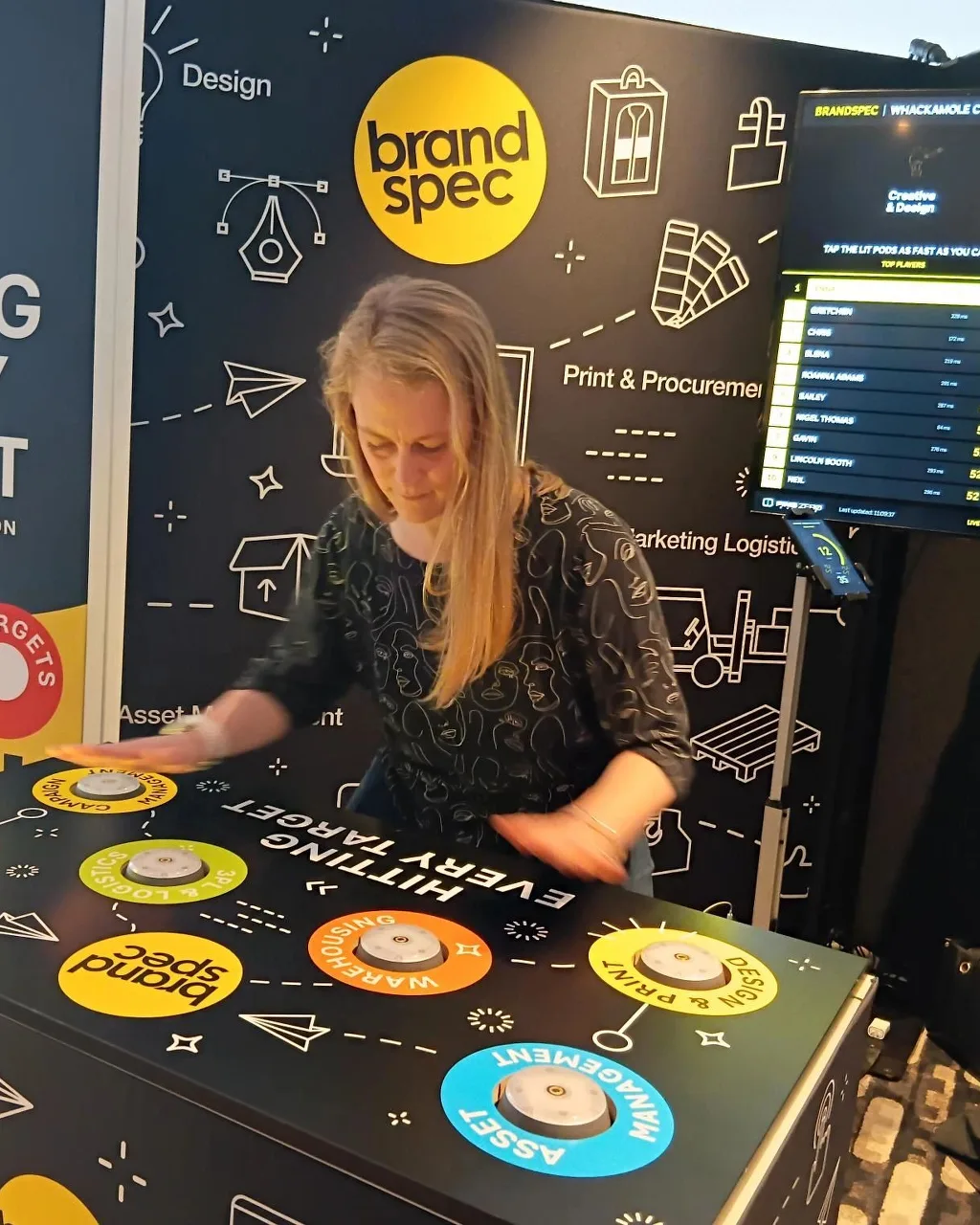
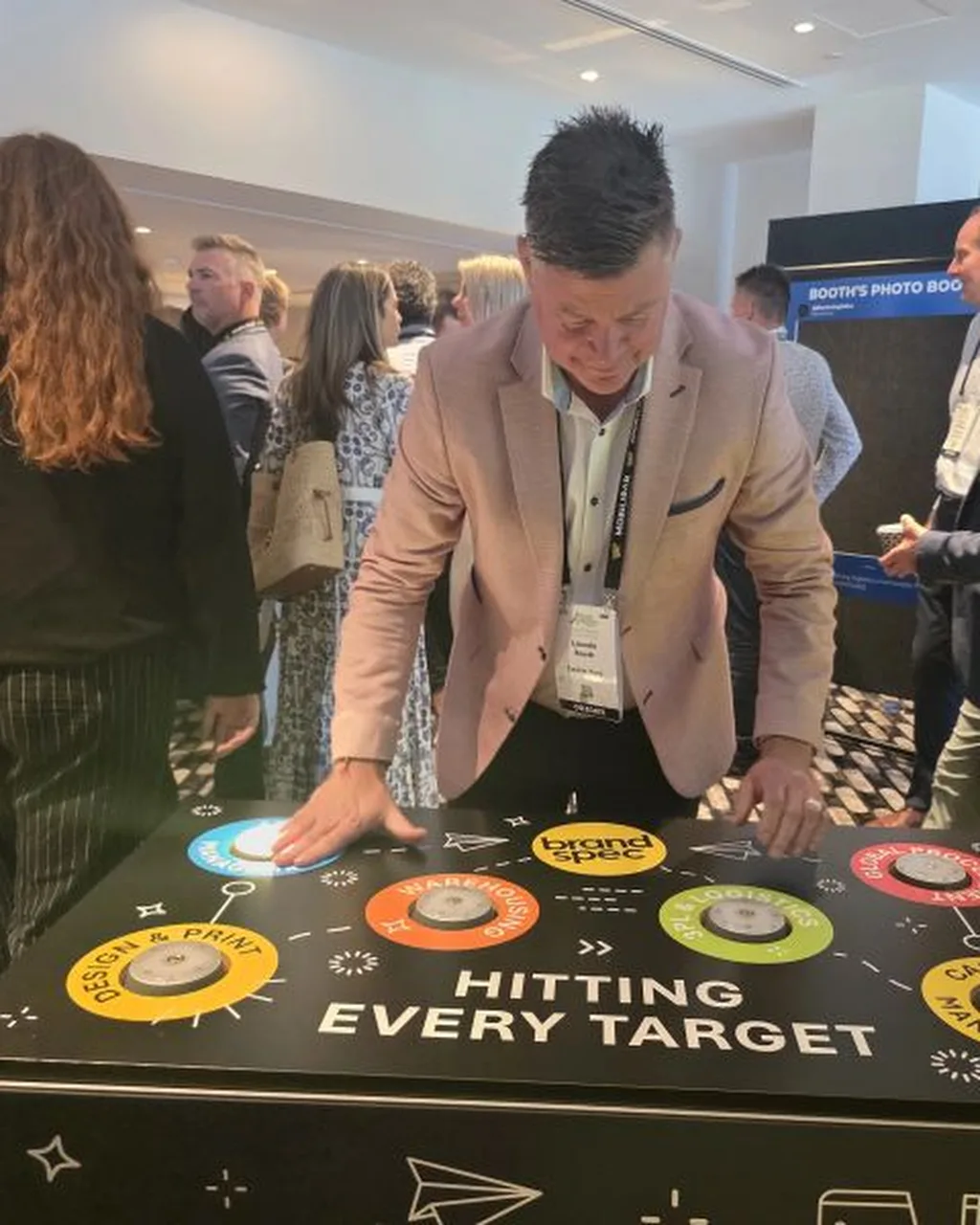
The tabletop carried Brandspec's own "Hitting Every Target" artwork, with each light set into one of their services: design and print, campaign management, warehousing, asset management, global procurement and logistics. Every time someone played, they were literally hitting Brandspec's services, over and over, as fast as they could. With a $500 Prezzy Card up for grabs, they had every reason to try again.
What We Built
This wasn't an off-the-shelf game with a logo stuck on. Brandspec brought the artwork, and we designed and built everything else.
The table. A custom-built console with a flat-pack frame and an 18mm benchtop, with six BlazePod reaction lights mounted flush into the top. Flat-pack mattered here: it meant the whole thing could travel to Queenstown and go together on site without a builder.
The game. Six BlazePod lights fire in random order, and players hit as many as they can before the clock runs out. We set the lights to Brandspec yellow, so even the game itself is on brand. Every hit plays a sound through the screen, so the stand sounds busy even when you're just walking past.
Tablet sign-up. Each player enters their name on a tablet before they start. It takes seconds, and it's the step that puts their name up in lights. At the end of the round the tablet shows their score, their best and median reaction times, and where they've landed on the board.
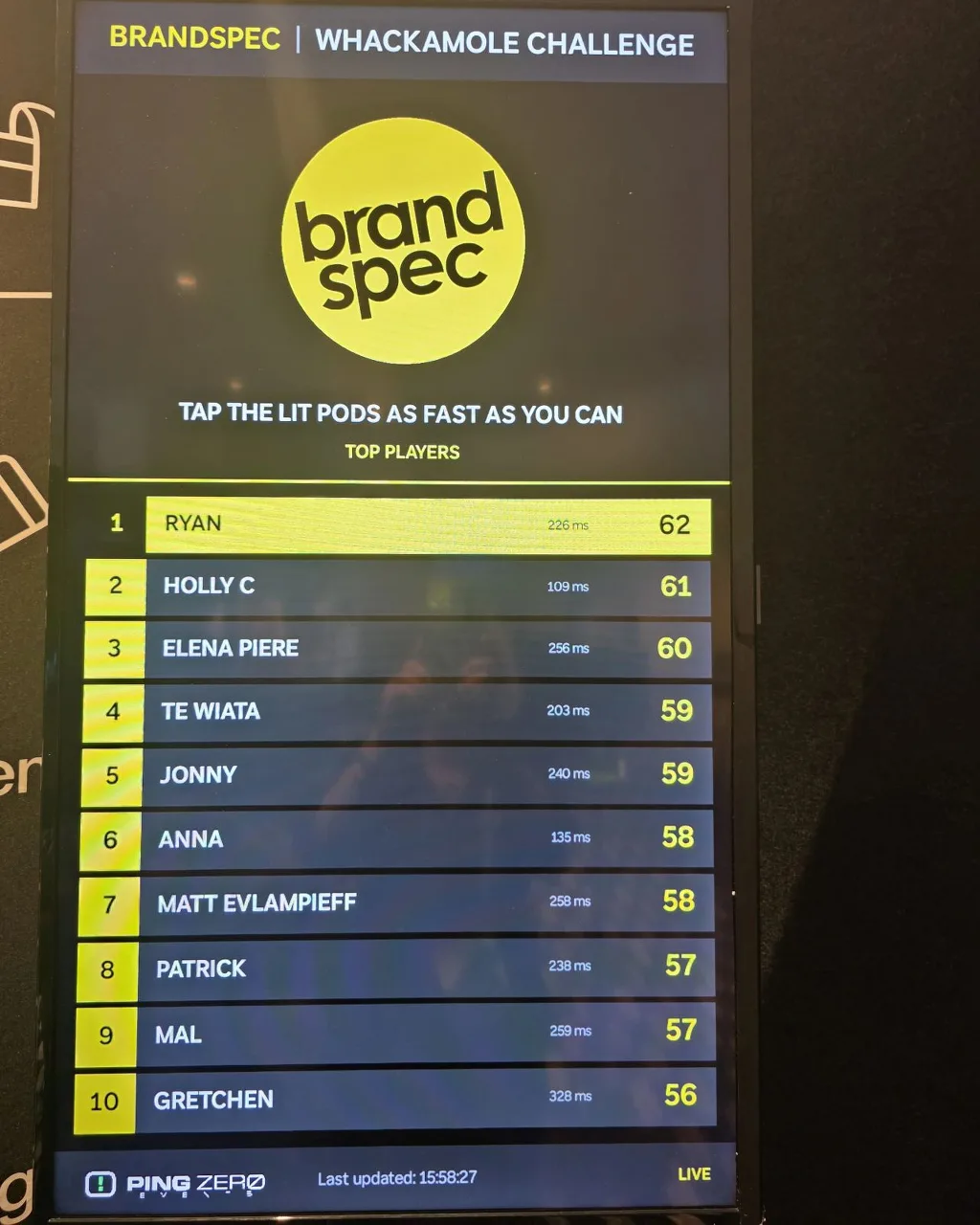
The live leaderboard. A big screen on the stand shows the top players in real time, fully branded for Brandspec, with every score updating the moment a round finishes.
The Leaderboard Is What Keeps People Coming Back
A game gets people to stop. A leaderboard gets them to stay.
The moment someone sees their name on the board, they're invested. They watch to see if anyone beats them. They bring their colleagues over. And if they get knocked down a spot, they come back for another go. That loop turns a one-minute game into a ten-minute visit, and turns a passer-by into someone who now knows exactly whose stand they're on.
Midway through the show, more than 50 people had already played. Ryan led on 62, with Holly one hit behind on 61 and a pack of players on 58 and 59. Holly kept coming back, and by the final she'd pushed her best to 69, two clear of Anna on 67. Close scores like that are what keep a crowd watching.
It's the same thinking behind the leaderboard we built for Shaw and Partners at Commercial Bay, where sim racing and a BlazePod reflex wall ran on one connected system. The format changes from job to job. The pull of seeing your name on the board doesn't.
Built to Hand Over: Running It Without Us
Not every event needs our crew on site. For this one, Brandspec ran the game themselves.
We delivered it to Brandspec's Wiri headquarters in Auckland a week before the show, set it up with them and walked them through everything: assembly, starting the game, signing players up and resetting between rounds. Then they took it to Queenstown and ran it for all three days, with us on the end of the phone if they needed anything.
That only works if the system is simple to run. That's why we built the tablet sign-up and automatic scoring the way we did. There's no one typing names into a spreadsheet, and no results to enter by hand. A player signs up, plays, and their score lands on the board by itself.
Trade Show Game Ideas: Why This Format Works
If you're planning a stand for an expo or trade show, here's what a game like this does for you:
- It draws a crowd. People stop to watch someone play. A crowd attracts more crowd.
- It works for everyone. No skill or gaming experience needed, so your whole audience can join in, not just the competitive ones.
- It's quick. Short rounds mean a steady flow of players and no long queues.
- It carries your brand. The table, the screen and the tablets can all be branded, and the game itself can tell your story, like Brandspec's services under every light.
- It gives people a reason to come back. The leaderboard does that on its own.
- It's flexible. We can run it for you with our crew, or build it so your team can run it themselves.
Build Your Own Trade Show Game
Got an expo, conference or trade show coming up? We design and build custom games and leaderboard activations from the ground up: reaction games, sim racing, time trials and more, fully branded and built around your brand's story. Whether you want our team running it or something your own crew can take on the road, we'll build it to suit.
Talk to us about your next activation, or see what else we build for brand activations.


